Home care that includes your pet
For many older people, the animal asleep by the chair is not a pet so much as the household itself. Yet care is usually arranged as if the person lived alone in an empty house. Here is how to arrange care that includes the pet — and what to ask before you do.
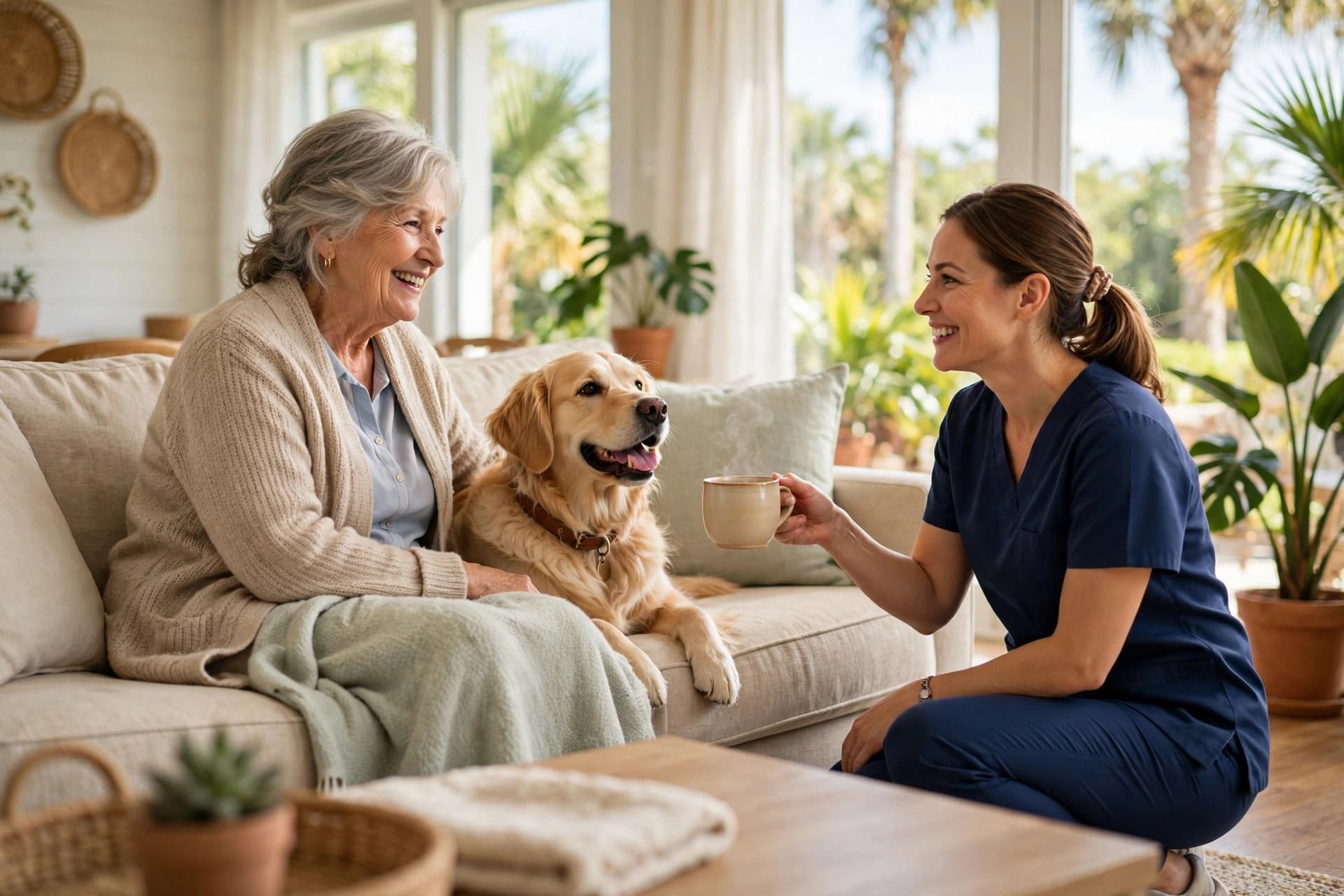
The gap nobody puts in the brochure
Ask a care provider what a visit covers and you will hear about the person: meals, laundry, company, a tidy home. Ask who feeds the cat, walks the dog, or cleans the litter tray, and the answer is often a pause. The pet's care falls to whoever happens to be there — or to nobody.
This gap is measured, not just felt. Companion Animals Network Australia surveyed older Australians about pets and aged care, and among pet owners who were receiving in-home care, only about 9% said their provider gave them any help with their pet at all. The need was there in nearly every home; the help was there in almost none of them.
Why people turn help away
When care arrangements ignore the pet, some people solve the problem by refusing the care. A move to a new home, a stay in respite, even accepting more help at home can all feel like they are priced in the animal's future — and for many owners, that price is too high.
Mather Institute surveyed older adults who live on their own — solo agers — and found that 89% of the pet owners among them said they would not move somewhere pets were not allowed. Read that alongside the first survey and the picture is plain: people will give up support they need before they will give up the animal who depends on them. Arranging care that includes the pet is not a luxury extra. For many families, it is the thing that makes care acceptable at all.
Three ways to arrange it
On Niptei, every request answers one question plainly: who is the care for? There are three answers, and the family chooses. Care can be for just the pet — visits that feed, water, walk, and clean up after the animal while the owner is away, unwell, or in respite. It can be for the pet and the person together — the homemaker, companion, or respite visit looks after both, in one arrangement. Or it can be for just the person, with no pet care at all — some families prefer to keep the pet's routine in their own hands, and saying so up front protects that choice.
One rule is fixed whichever answer you choose: pet care is always private pay on Niptei, and its cost is recorded separately from the cost of care for the person, so a family can always see exactly what the pet's care cost and what the person's care cost. Pet tasks themselves are the everyday ones — feeding and fresh water, walks, litter and cleanup — agreed with the provider like any other part of the visit.
Questions to ask any provider
Before you arrange care that includes a pet, ask: will your carers feed, water, and walk my pet as part of the visit, or is that outside what they do? Is the pet's cost shown separately on the bill? What happens to my pet if I am taken into hospital suddenly — is there a plan, and who holds it? And if the care is respite, does the pet stay home with the replacement carer, come with me, or go somewhere else — and who decided?
A provider who has thought about pets can answer each of these without hesitation. A provider who cannot is telling you something worth hearing before the first visit, not after it.
Tell us what you need
Start the same way the homepage does: pick the help, say where care is needed, and see the providers listed for your area. If none is listed yet, you can register your interest there instead — that is how new areas open.